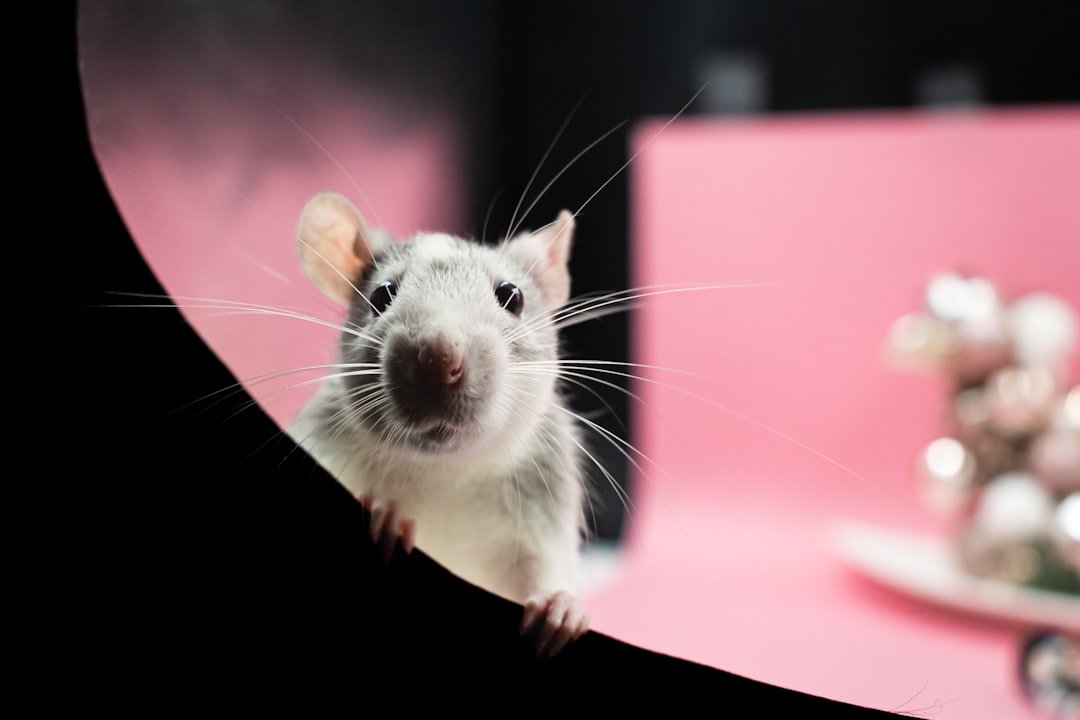
The Whispering Mouse: Unveiling Your Unconscious and Navigating Life’s Small Challenges
Ah, a mouse! Don’t let its diminutive size fool you. In the vast tapestry of dreams, the humble mouse often scurries into our subconscious with potent messages. It’s a symbol that can evoke a spectrum of feelings, from a shiver of apprehension to a sense of quiet observation. Perhaps you woke with a lingering image of tiny paws scrabbling, or a feeling of something small yet significant unfolding. This dream matters, my dear, because the unconscious mind rarely sends signals without purpose. The mouse, in its quiet persistence, can point to hidden anxieties, overlooked details, or even the quiet strength that lies within the seemingly insignificant. It’s time to lean in and listen to what this little creature is trying to tell you about your inner landscape and the subtle currents of your waking life.
What Does a Mouse Mean in a Dream?
The word ‘mouse’ itself conjures images of smallness, quietness, and often, a certain vulnerability. Etymologically, the word ‘mouse’ originates from the Proto-Indo-European root *mū́s, which likely relates to the sound of squeaking or rustling. This sonic connection is fascinating, as it hints at the mouse’s role as a messenger, a creature that communicates in subtle, often overlooked ways. In many cultures, the mouse has been associated with both good luck and ill omen, a duality that perfectly reflects its dream symbolism. It can represent something insignificant that is nonetheless persistent and can cause a great deal of disruption if ignored, much like a small worry that gnaws at your peace of mind. Conversely, its ability to navigate tight spaces and find sustenance can symbolize resourcefulness, adaptability, and the ability to thrive in challenging environments. The mouse’s inherent nature is to be observant, to be aware of its surroundings, and to act with caution. These traits can be directly mirrored in what the dream is trying to highlight for you: the importance of paying attention to the details, of being mindful of your environment, and of approaching situations with a degree of prudence. Its small size doesn’t diminish its impact; rather, it often amplifies it, suggesting that even the smallest issues can hold significant weight when they enter the realm of our dreams.
Common Dream Scenarios
Scenario 1: A Fearful Encounter with a Mouse
Emotional Context: Fear, Anxiety, Disgust, Helplessness
You might dream of a mouse scurrying across your path, or perhaps a swarm of them invading your space. This scenario often triggers feelings of unease, disgust, or even panic. From a psychological perspective, this could represent anxieties that you are trying to suppress or ignore. The mouse, being small and often associated with dirt or disease, can embody those nagging worries or insecurities that feel overwhelming despite their perceived smallness. It might be a fear of failure, a hidden shame, or a sense of being contaminated by something negative in your waking life. Spiritually, a fearful encounter could signify an imbalance in your lower chakras, particularly the root chakra (Muladhara), which governs our sense of security and grounding. The biblical narrative of the serpent and the apple, a small temptation leading to profound consequences, can also be a resonance here – a small issue perceived as a threat to your well-being. Practically, this dream is a strong signal to confront what is making you feel vulnerable. What small, persistent issue are you avoiding? It’s time to acknowledge it and address it, rather than letting it fester and cause distress.
Scenario 2: A Pleasant Interaction with a Mouse
Emotional Context: Curiosity, Affection, Playfulness, Gentle Observation
In this dream, you might find yourself gently holding a mouse, watching it curiously, or even playing with it. The emotions here are warm and curious, devoid of fear. Psychologically, this suggests a healthy engagement with aspects of yourself that you might normally overlook. It could represent a willingness to explore the ‘shadow’ aspects of your personality – those less desirable traits that Jung spoke of – with a sense of acceptance and understanding. This also points to a capacity for finding joy and wonder in the small, simple things in life. Spiritually, this can be linked to the heart chakra (Anahata), symbolizing compassion and connection, even with the seemingly insignificant. It might also suggest a connection to the earth element, representing groundedness and nurturing. In numerology, the number 2, often associated with partnership and harmony, could be relevant here if the interaction feels balanced. Practically, this dream encourages you to cultivate a sense of gentle curiosity and appreciation for the smaller joys and details in your life. It’s a reminder that growth and understanding can come from observing and interacting with aspects of yourself and your world with kindness.
Scenario 3: A Neutral Observation of a Mouse
Emotional Context: Detachment, Observation, Awareness, Curiosity without Engagement
You might simply see a mouse in the background of your dream, observing its movements without strong emotional reaction. This scenario is characterized by a sense of detached observation. Psychologically, it suggests that you are becoming aware of subtle influences or details in your waking life that you haven’t yet fully processed. It’s like your unconscious is pointing out something important, but you’re not yet emotionally invested in it. This could be a new idea, a subtle shift in a relationship, or a small problem that is beginning to manifest. Spiritually, this dream might relate to the third eye chakra (Ajna), representing intuition and awareness. The mouse acts as a visual cue for a deeper, more subtle perception. In terms of tarot, the imagery of a small creature going about its business could be akin to the quiet persistence of the Hermit, emphasizing inner contemplation and observation. Practically, this dream advises you to pay attention to the details you’re noticing. Don’t dismiss what seems minor; it might be the beginning of something significant. Take time to reflect on what you observed and consider its potential implications.
Scenario 4: A Mouse Causing Minor Annoyance
Emotional Context: Irritation, Frustration, Mild Inconvenience
Imagine a mouse nibbling at your food, or perhaps making small noises that are just enough to be bothersome. This scenario highlights a feeling of mild irritation or frustration with something that is persistently disruptive. Psychologically, this could represent small, ongoing problems in your waking life that are chipping away at your peace of mind. These aren’t catastrophic issues, but they are enough to cause annoyance and require your attention. Think of nagging tasks, minor conflicts, or small inefficiencies that, when accumulated, become a source of stress. Spiritually, this might indicate a slight blockage in your solar plexus chakra (Manipura), affecting your sense of personal power and control. It suggests that these small annoyances are impacting your ability to feel confident and in charge. Practically, this dream is a clear call to action. Identify the small, irritating issues that are bothering you and take steps to resolve them. Don’t let them build up; address them proactively to regain your sense of ease and control.
Scenario 5: A Mouse as a Protector or Guide
Emotional Context: Trust, Guidance, Unexpected Help, Inner Wisdom
This is a rarer but powerful scenario where the mouse appears to be helping you, leading you, or protecting you from something. Perhaps it leads you to a hidden passage or warns you of danger. Psychologically, this could symbolize the emergence of your inner wisdom or intuition. The small, unassuming mouse represents a part of yourself that is highly intelligent and perceptive, a guide that operates beneath the surface of your conscious awareness. It might also signify that you are receiving subtle support or guidance from unexpected sources in your waking life. Spiritually, this could be a message from your spirit guides or a manifestation of your own higher self, appearing in a humble form. The number 7, often associated with inner wisdom and spirituality, might be relevant here. In biblical lore, even the smallest creatures can be instruments of divine will. Practically, this dream encourages you to trust your intuition and be open to subtle guidance. It suggests that help and wisdom can come in unassuming forms, so be attentive to these subtle nudges.
Scenario 6: A Dead Mouse in a Dream
Emotional Context: Sadness, Loss, Endings, Relief, Unresolved Issues
Dreaming of a dead mouse can evoke a range of feelings, from sadness and loss to a sense of relief or even disgust. Psychologically, this often signifies the ending of a situation or a feeling that has been causing you distress. It could represent the death of an old habit, a fear that you have finally overcome, or a problem that has been resolved. However, it can also symbolize a missed opportunity or a loss of something small but perhaps significant. Spiritually, this could indicate a resolution of energetic blockages, particularly in the lower chakras, leading to a sense of cleansing or renewal. The number 9, representing completion and endings, could be associated with this dream. In some traditions, the death of a creature can signify a transformation. Practically, consider what has recently ended in your life, or what you feel you have overcome. If the feeling is relief, acknowledge the release. If it’s sadness, consider what was lost and how you can find closure.
Spiritual & Numerological Meaning
In the realm of spirituality and esoteric wisdom, the mouse carries a multifaceted symbolic weight. Numerologically, the number associated with the mouse can vary depending on its context and the specific interpretation. However, as a creature of subtlety and persistence, it often aligns with numbers that represent observation, adaptation, and hidden potential. The number 1, representing new beginnings and individuality, can be linked to the mouse’s ability to start anew in different environments. The number 4, associated with grounding and practicality, resonates with the mouse’s ability to find sustenance and build shelter. The number 9, signifying completion and wisdom, can be connected to the mouse’s instinctual knowledge and its role in the natural cycle of life and death. In many indigenous traditions, the mouse is seen as a symbol of foresight and the ability to survive by being attuned to the environment. Native American lore, for instance, often views the mouse as a creature of great wisdom, capable of finding hidden paths and resources. In ancient Egyptian mythology, the mouse was sometimes associated with the god of chaos and destruction, but also with the protective aspects of hearth and home, reflecting its dual nature. Tarot symbolism offers further layers. The imagery of a small, often overlooked creature can be found in cards like The Hermit (XIV), emphasizing introspection and the search for inner truth, or even The Fool (0), representing a journey into the unknown with an element of innocent curiosity. The mouse’s connection to the earth element also links it to grounding, stability, and the practicalities of life. Its ability to gnaw through obstacles, though sometimes destructive, can also be seen as a metaphor for perseverance and breaking down barriers, both internal and external. The chakras that might be most influenced by mouse symbolism are the root chakra (Muladhara) for grounding and security, and the solar plexus chakra (Manipura) for personal power and overcoming minor obstacles. When a mouse appears in your dreams, it’s often a call to pay attention to the subtle energies and the seemingly insignificant aspects of your spiritual journey, reminding you that even the smallest things hold profound meaning.
Psychological Interpretation
From the Freudian perspective, the mouse in a dream can represent repressed desires or anxieties that the dreamer is either trying to conceal or is unconsciously aware of. The smallness and often perceived insignificance of the mouse can mirror those aspects of the self that are deemed unimportant or socially unacceptable, yet persist in the unconscious. Freud might interpret the act of the mouse scurrying or hiding as a manifestation of the dreamer’s own attempts to avoid confronting these buried feelings or desires. Jung, on the other hand, would look at the mouse through the lens of archetypes and the collective unconscious. He might see the mouse as representing the ‘shadow’ – those disowned or rejected parts of the personality. If the dreamer experiences fear towards the mouse, it could signify a fear of confronting their own shadow self. Conversely, a positive or neutral interaction might indicate an integration of these shadow aspects, or a recognition of their potential value. The anima/animus, Jung’s concept of the contrasexual aspect of the psyche, could also be at play. A mouse might represent a more subtle, intuitive, or even timid aspect of the dreamer’s inner feminine (anima) or masculine (animus) energy. Modern dream science, utilizing neuroimaging and cognitive psychology, suggests that dream symbols like the mouse can be related to the brain’s processing of daily experiences, anxieties, and problem-solving. The amygdala, the brain’s fear center, might be activated by the mouse if it represents a perceived threat or anxiety. The hippocampus, involved in memory consolidation, could be linking the mouse to past experiences of fear or even comfort. The consistent appearance of a mouse in dreams could also be interpreted as a signal from the brain that a particular issue, no matter how small it seems, requires attention and resolution. It’s the brain’s way of highlighting something that is subtly impacting your emotional or psychological well-being. Therefore, the mouse is not merely a random image, but a potent symbol that can reveal much about the hidden workings of your mind, your unresolved conflicts, and your journey towards self-understanding and integration.
Cultural Variations
The interpretation of a mouse in dreams can vary significantly across different cultures, reflecting their unique relationships with these small creatures. In many Western cultures, mice are often associated with pests, dirt, and minor infestations, leading to dreams of mice being interpreted as symbols of worry, contamination, or small, persistent problems. This view is often reinforced by the common experience of mice in homes as unwanted intruders. However, even within Western traditions, there are nuances. In some folklore, a mouse seen running across one’s path could be an omen of good luck or a sign that one should be alert to opportunities. In contrast, in some Asian cultures, particularly in China, the mouse is considered one of the twelve zodiac animals and is associated with intelligence, resourcefulness, and wealth. Dreaming of mice in these contexts might be seen as a positive omen, suggesting good fortune, financial gain, or clever problem-solving abilities. The Year of the Rat (or Mouse) in the Chinese zodiac is considered a time of new beginnings and prosperity. In Japan, the mouse can sometimes be associated with the god of wealth, Daikokuten, and is seen as a bringer of good luck. Dreaming of mice might symbolize abundance and good fortune. In India, while mice can sometimes be seen as pests, they are also revered in certain temples, such as the Karni Mata Temple in Rajasthan, where thousands of mice are considered sacred and are believed to bring good luck to devotees. Therefore, a dream of a mouse in India might be interpreted through a lens of reverence and spiritual blessing. In some African cultures, the mouse might be seen as a trickster figure, embodying cunning and agility, or as a symbol of survival and adaptability in harsh environments. These interpretations highlight how deeply our cultural narratives shape our understanding of dream symbols, transforming a simple creature into a rich tapestry of meaning.
What To Do After This Dream
My dear, the insights from your mouse dream are now laid bare. The next step is to integrate this wisdom into your waking life. Here are some prompts for your journal and actionable steps:
- Journal Prompt 1: Identify the Emotion. “When I saw the mouse in my dream, I felt _______. What current situation in my life evokes a similar emotion, even on a smaller scale?”
- Action Step 1: Address the ‘Small Annoyances’. If your dream involved frustration or annoyance, list the small, persistent issues in your life that are causing you stress. Choose one to tackle this week. Break it down into manageable steps.
- Journal Prompt 2: Explore Hidden Aspects. “If the mouse represents a part of me that I usually ignore or fear, what might that part be? What is it trying to communicate to me?”
- Action Step 2: Cultivate Curiosity. If your dream was pleasant or neutral, practice mindful observation in your daily life. Pay attention to the small details, the quiet moments, and the subtle interactions. What do you notice that you might have previously overlooked?
- Journal Prompt 3: Seek Subtle Guidance. “If the mouse was a guide, what was it leading me towards? What subtle nudges or intuitions have I been receiving recently that I might have dismissed?”
- Action Step 3: Trust Your Intuition. When faced with a decision, try to listen to your gut feelings. Don’t dismiss them just because they seem illogical or come from an unexpected source.
- Journal Prompt 4: Reflect on Endings. “If the dead mouse signifies an ending, what has recently concluded in my life? Am I experiencing relief or sadness about this ending, and why?”
- Action Step 4: Embrace Completion. Acknowledge any endings or resolutions in your life. If there’s lingering sadness, allow yourself to grieve. If there’s relief, celebrate your progress and newfound freedom.
Remember, my dear, the dream world is a powerful mirror reflecting your inner truth. By understanding the whispers of the mouse, you gain clarity, courage, and the wisdom to navigate your path with greater intention and grace. Until your next dream, may you find peace and insight in all its messages.