Dreaming of Fog: Unveiling the Mysteries of Uncertainty and Clarity
The ethereal tendrils of fog, obscuring familiar landscapes and muffling the world’s sounds, often find their way into our sleeping minds. These dreams are rarely about the weather itself; rather, they are potent symbols that speak to the very essence of our inner and outer worlds. When fog blankets your dreamscape, it’s an invitation to explore the unseen, to navigate the ambiguous, and to uncover the hidden layers of your consciousness. This isn’t just a fleeting image; it’s a profound message from your unconscious, urging you to confront what lies beneath the surface. Are you feeling lost, confused, or perhaps on the cusp of a significant revelation? The dream of fog is your inner guide, offering a unique lens through which to examine your current life circumstances, your deepest desires, and the spiritual currents that shape your journey. Let us venture together into this atmospheric mystery, deciphering its whispers and illuminating the path forward.
What Does Fog Mean in a Dream?
The word “fog” itself carries a sense of obscurity and diffusion. Etymologically, it originates from Old English “fōg,” related to “fogge,” meaning “misty” or “cloudy.” This inherent connection to a lack of clear visibility is central to its dream symbolism. In dreams, fog represents a state of uncertainty, confusion, and a lack of clarity in your waking life. It can signify a period where your path is not clearly defined, where your thoughts are muddled, or where you are struggling to make sense of a situation or a relationship. The density of the fog in your dream often correlates with the intensity of this feeling of being lost or overwhelmed. A light mist might suggest minor indecision, while a thick, impenetrable fog points to a more significant sense of bewilderment and a feeling of being completely disoriented. Beyond mere confusion, fog can also symbolize the unconscious mind itself, a place where hidden desires, suppressed emotions, and archetypal energies reside, waiting to be brought to light. It’s a veil between the known and the unknown, a liminal space where transformation can occur. The dream is nudging you to acknowledge these areas of obscurity, not to fear them, but to approach them with curiosity and a willingness to explore. It’s a call to introspection, to look beyond the immediate, and to trust your inner compass even when the external signs are unclear. The dream of fog is a powerful metaphor for the human experience of navigating the unknown, a constant cycle of questioning, seeking, and ultimately, finding our way.
Common Dream Scenarios
1. Lost in Thick Fog
When you dream of being utterly lost in a dense, suffocating fog, this is a powerful manifestation of feeling overwhelmed and disoriented in your waking life. The inability to see your surroundings mirrors a sense of being unable to see your way forward in a particular situation, career path, or relationship. There’s a palpable feeling of helplessness, where your usual coping mechanisms seem ineffective, and you’re left feeling adrift. Psychologically, this can point to significant indecision, a fear of making the wrong choice, or a feeling of being controlled by external circumstances. Spiritually, it might indicate a disconnect from your higher self or a period of spiritual searching where your usual guidance feels absent. This dream is a plea from your unconscious to slow down, to acknowledge your feelings of confusion, and to seek internal guidance rather than external validation. It’s a moment to pause, breathe, and trust that even in the thickest fog, there is a path, however hidden it may seem.
2. Driving Through Fog
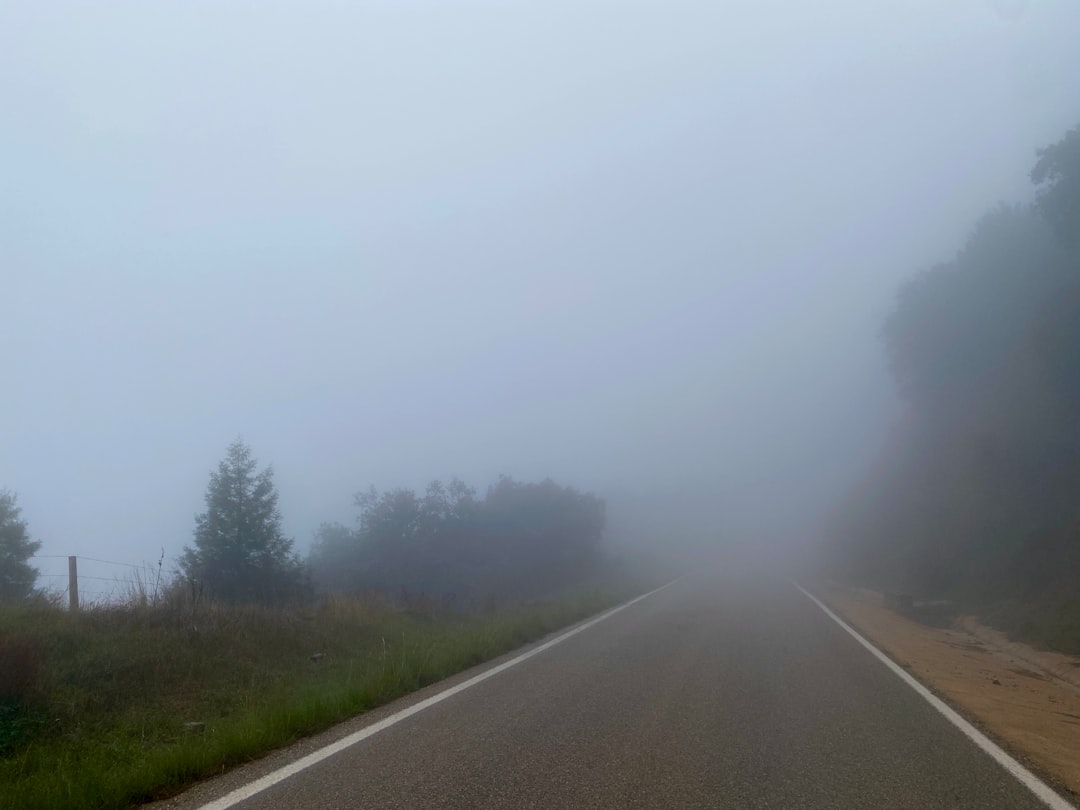
Dreaming of driving a vehicle through fog presents a slightly different dynamic. While still indicative of uncertainty, the act of driving implies a degree of agency and a desire to move forward despite the obscured vision. You are actively trying to navigate the unknown. This scenario suggests that you are aware of the ambiguities in your life but are determined to persevere. However, it also carries a warning: are you moving too fast, ignoring potential dangers, or relying too much on instinct without sufficient information? This dream can highlight a tension between your desire for progress and the current lack of clarity. It might be a call to adjust your pace, to be more cautious, and to seek out reliable sources of information or guidance. Are you being reckless in your pursuit of a goal, or are you genuinely trying to find your way with mindful intention? This dream encourages a balance between action and awareness.
3. Fog Lifting and Revealing Something
This is a highly positive dream scenario. When the fog in your dream begins to lift, revealing something previously hidden, it signifies a breakthrough in clarity and understanding. This could be the resolution of a problem, the revelation of a truth, or a newfound sense of direction. The object or scene revealed as the fog dissipates holds significant meaning. For instance, if a beautiful landscape is revealed, it suggests a bright future or a period of peace. If a specific person appears, it may indicate their true nature or their importance in your life. Psychologically, this dream represents the overcoming of mental blocks, the dispelling of confusion, and the integration of unconscious material into your conscious awareness. Spiritually, it can symbolize enlightenment, awakening, or a divine revelation. This dream is a powerful affirmation that clarity is on the horizon, and your efforts to understand yourself and your circumstances are about to pay off.
4. Foggy Relationships
If your dream features fog surrounding people or relationships, it directly addresses issues of communication and understanding within your interpersonal connections. You might be experiencing a lack of clarity about someone’s intentions, feelings, or their role in your life. There could be misunderstandings, unspoken truths, or a general sense of emotional distance. This dream is a prompt to examine your relationships more closely. Are you being open and honest? Are you able to truly see and understand the people around you, or are you projecting your own fears and assumptions? It might be time for open communication, to seek to bridge emotional gaps, or to re-evaluate the authenticity of certain connections. The fog represents the barriers that are preventing genuine intimacy and clear understanding.
5. Fog as a Protective Barrier
In some instances, fog can be perceived not as an obstruction but as a protective element. Dreaming of being enveloped in fog, feeling safe and hidden, can indicate a subconscious need for retreat or respite from the pressures of the outside world. This might occur during times of stress, emotional vulnerability, or when you feel exposed and overwhelmed. The fog acts as a shield, allowing you to gather your strength, process your emotions, and protect your inner self. Psychologically, it suggests a need for self-care and a temporary withdrawal from demanding situations. Spiritually, it can be a period of introspection and inner sanctuary, where you are communing with your soul without external interference. This dream encourages you to honor your need for privacy and to create safe spaces for yourself.
6. Fog and Fear
When the fog in your dream evokes feelings of intense fear, dread, or anxiety, it amplifies the negative connotations of uncertainty. This fear isn’t just about not knowing; it’s about a deep-seated apprehension of what might be hidden within the fog. This can relate to phobias, past traumas, or a profound fear of the unknown and what it might bring. The dream is urging you to confront these underlying fears. Ignoring them will not make them disappear; they will continue to manifest in your subconscious. This is a call for courage, for taking small, deliberate steps to face what frightens you, perhaps by seeking support from trusted friends, family, or a professional therapist. The dream is acknowledging the intensity of your fear, but it also holds the potential for overcoming it.
Spiritual & Numerological Meaning
From a spiritual perspective, fog often symbolizes the veil between the physical and spiritual realms, or the liminal space between states of consciousness. It is a place of transition, where old energies are dissolving and new ones are beginning to form. In numerology, the number associated with fog is often 9, representing completion, endings, and the wisdom gained from experience. The energy of 9 encourages us to let go of what no longer serves us, to embrace the unknown as a necessary part of spiritual growth, and to trust in the unfolding of divine timing. The cyclical nature of fog – appearing, obscuring, and then dissipating – mirrors the spiritual journey of shedding old skins and embracing new beginnings. Tarot symbolism offers further insight. The Moon card, with its imagery of a veiled, mysterious landscape and distant lights, resonates deeply with the feeling of fog. The Moon represents intuition, the subconscious, illusions, and the hidden aspects of ourselves. Dreams of fog can be seen as an invitation to explore these lunar energies, to delve into your intuition, and to confront the illusions that may be clouding your perception. Furthermore, certain chakra connections can be made. The Third Eye Chakra (Ajna), associated with intuition, perception, and inner wisdom, can be either clouded by fog (indicating blocked intuition) or illuminated by the fog lifting (signaling enhanced psychic awareness). The Throat Chakra (Vishuddha), linked to communication and self-expression, can also be affected, suggesting that the fog might be hindering your ability to speak your truth or to clearly articulate your thoughts and feelings. Biblical references often depict fog or mist as a sign of divine presence or as a veil that obscures understanding, such as in the story of God appearing to Abraham in a “deep, dark, terrifying darkness” (Genesis 15:12), which can be interpreted as a profound, mystifying encounter. Mythological traditions sometimes associate fog with the underworld or with passages between realms, underscoring its role as a transitional and mysterious element.
Psychological Interpretation
From a Western psychological standpoint, dreams of fog are rich with meaning, often reflecting the state of your unconscious mind and the processes of your psyche. Sigmund Freud would likely interpret fog as a manifestation of repressed desires or unresolved conflicts that are obscuring your conscious awareness. The vagueness of the fog symbolizes the ambiguity of these hidden elements, preventing them from being fully understood or integrated. He might suggest that the dream is urging you to bring these unconscious elements into the light, even if the process feels unsettling. Carl Jung, on the other hand, would view fog through the lens of archetypes and the collective unconscious. The fog could represent the Shadow – the unacknowledged or disowned parts of yourself that are hidden from view. It might also symbolize the Anima (in men) or Animus (in women) – the unconscious feminine or masculine aspects that are not yet integrated into the personality, creating a sense of inner confusion or incompleteness. The act of navigating or being lost in fog could also relate to the individuation process, the journey of becoming a whole and integrated self, where periods of confusion and uncertainty are inevitable. Modern dream science, utilizing neuroimaging and cognitive psychology, suggests that dream imagery often reflects our waking concerns and emotional states. Fog dreams may correlate with periods of high anxiety, stress, or significant life transitions where decision-making is difficult. The brain may be processing these uncertainties by creating a visual metaphor of obscurity. Furthermore, the dream could be a form of cognitive rehearsal, allowing you to explore potential outcomes of ambiguous situations in a safe, simulated environment, even if the experience feels disorienting. The emotional tone of the dream is crucial; a fearful fog suggests unresolved anxieties, while a neutral or even pleasant fog might indicate a comfortable embrace of the unknown or a sense of peaceful transition.
Cultural Variations
The interpretation of fog dreams can vary significantly across different cultures, reflecting diverse worldviews and spiritual beliefs. In many East Asian cultures, particularly those influenced by Taoism and Buddhism, fog is often seen as a natural phenomenon that symbolizes the impermanence of all things and the interconnectedness of the universe. A dream of fog might be interpreted as a reminder to embrace the flow of life, to accept that clarity is not always immediate, and to cultivate patience and mindfulness. In some indigenous North American traditions, fog can be associated with the spirit world or with ancestral guidance. It might be seen as a sacred mist that separates the physical realm from the spiritual, and dreams of fog could be interpreted as a message from the ancestors or a sign that one is entering a sacred space. The fog’s ability to obscure can also be seen as a protective cloak, shielding one from unseen dangers or negative influences. In some European folklore, fog has been historically linked to mystery, enchantment, and even danger. Stories of will-o’-the-wisps leading travelers astray in foggy marshes or tales of supernatural beings emerging from the mist can imbue fog dreams with a sense of the uncanny or the supernatural. Depending on the specific cultural narrative, a fog dream might be a warning of deception or an invitation to explore the magical or the unknown. In cultures where clear skies and sunshine are highly valued, fog might be inherently viewed with a more negative connotation, symbolizing a lack of progress or a gloomy outlook. Conversely, in regions where fog is a common and accepted part of the climate, its symbolic meaning might be more neutral, simply representing a temporary state of obscured vision rather than a profound omen.
What To Do After This Dream
The dream of fog is a potent catalyst for self-reflection and mindful action. To truly glean its wisdom, engage with its message actively. Begin by journaling immediately after waking. Describe the fog in as much detail as possible: its density, color, smell, the sounds you could hear (or the silence), and most importantly, how it made you feel. Were you fearful, anxious, curious, calm, or determined? Then, consider these prompts:
- Identify the “fog” in your waking life: What specific situations, relationships, or decisions are currently unclear or causing you confusion? Write them down.
- Explore your emotions: How do these areas of uncertainty make you feel? Acknowledge and validate these emotions without judgment.
- Examine your actions: Are you actively trying to find clarity, or are you feeling stuck? What small, tangible steps can you take to gain more information or make a decision?
- Seek inner guidance: If the fog represents a spiritual or personal blockage, consider practices like meditation, deep breathing exercises, or spending time in nature to reconnect with your intuition.
- Communicate when appropriate: If the fog relates to relationships, consider if open and honest communication is needed. How can you express yourself more clearly, or how can you seek to understand others better?
- Embrace the unknown: Sometimes, the fog is a necessary part of the journey. Can you find a sense of peace in not having all the answers right now? What can you learn from this period of ambiguity?
- Consult your “guides”: If you have spiritual practices, consult relevant texts, numerological insights, or tarot cards for further guidance on navigating this period of obscurity.
Remember, the fog in your dream is not a permanent state. It is a temporary veil that, when understood and navigated with intention, can lead to profound clarity and a deeper understanding of yourself and your path.