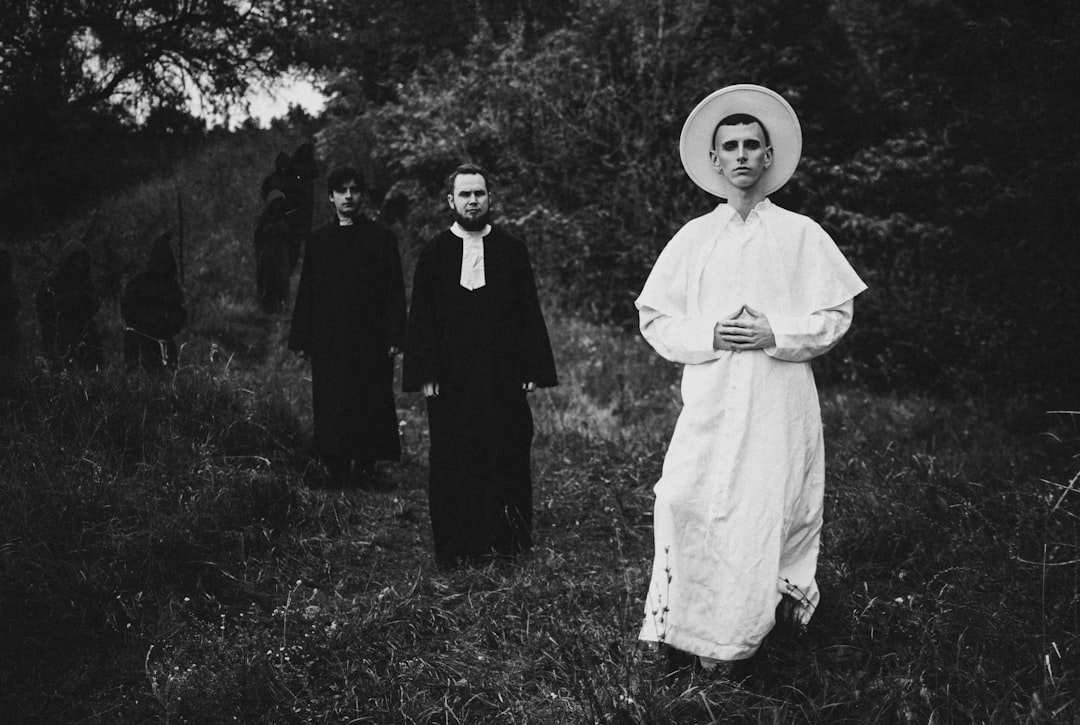
Dreaming of Ghosts: Unveiling the Unseen Echoes of Your Past and Future
Did a spectral figure drift through your slumbering mind last night, leaving you with a chill and a flurry of questions? Dreaming of ghosts is a profoundly common and often unsettling experience. But before you dismiss it as mere spooky imagination or a reaction to a late-night horror movie, understand this: these ethereal apparitions are far more than just phantoms of the night. They are potent messengers from the deepest recesses of your psyche, carrying vital information about your unresolved emotions, lingering regrets, forgotten memories, and even aspects of yourself that you may have suppressed or are yet to discover. In the realm of dreams, ghosts act as archetypal symbols, beckoning you to confront the unseen, to acknowledge what has passed, and to understand how it continues to shape your present and influence your future. This is not about literal hauntings; it’s about the hauntings of the soul, the echoes that resonate within us, and the profound wisdom that can be gleaned when we dare to listen. Let us embark on a journey into this spectral landscape, guided by the wisdom of psychology, spirituality, and practical life experience.
What Does a Ghost Mean in a Dream?
The word “ghost” itself originates from the Old English “gāst,” meaning “breath, spirit, soul.” This etymology immediately hints at the ethereal, incorporeal nature of what we associate with ghosts – that which is animated by a spirit or soul, yet detached from the physical form. In dream interpretation, a ghost is a powerful symbol that represents a multitude of things, depending on the context of the dream and the dreamer’s personal associations. At its core, a ghost often signifies something from the past that is still influencing the present. This could be an unresolved issue, a lingering emotion, a memory that has not been fully processed, or even a relationship that has ended but still holds emotional weight. Psychologically, ghosts can embody the “shadow self” – those parts of our personality that we have rejected, denied, or are unaware of. They can represent repressed desires, fears, or guilt that are bubbling up from the unconscious, demanding attention. Spiritually, ghosts are often seen as entities that have not fully moved on, symbolizing unfinished business or spiritual attachments. They can also represent ancestral spirits or guides, offering wisdom or warnings. In folklore and mythology across cultures, ghosts are frequently depicted as spirits of the dead, often seeking resolution, revenge, or to deliver a message. Their appearance in dreams, therefore, is rarely random; it is a deliberate communication from your inner world, urging you to acknowledge and integrate these spectral energies.
Common Dream Scenarios
1. Being Chased by a Ghost (Fearful Context)
When you dream of being relentlessly pursued by a ghost, it’s a potent symbol of avoidance. This dream often surfaces when you are actively trying to run away from an uncomfortable truth, a difficult emotion, or a past experience that you haven’t confronted. The ghost represents this unresolved issue, and the chase signifies your internal struggle to escape its influence. Psychologically, this could relate to Freudian concepts of repression, where unpleasant memories or desires are pushed into the unconscious to avoid distress. Jung might interpret this as the shadow self chasing you, representing the parts of yourself you are unwilling to integrate. The fear you experience in the dream is a direct reflection of the anxiety you feel in your waking life about facing this issue. It’s a powerful, albeit frightening, call to stop running and turn around to face what is pursuing you, as it will only gain power the longer you evade it. The emotional intensity of the fear highlights the urgency of this internal confrontation.
2. Seeing a Ghost of a Loved One (Pleasant/Neutral Context)
Dreaming of a ghost of a deceased loved one can be a deeply comforting or a poignant experience. If the encounter is pleasant, with the ghost offering reassurance or a sense of peace, it often signifies that you are processing your grief in a healthy way and have found a sense of closure, or perhaps are receiving spiritual guidance and comfort from their memory. It can be a manifestation of your unconscious mind cherishing their presence and wisdom. If the encounter is neutral, it might simply indicate that this person’s memory or influence is still very much alive within you, and their spirit or the lessons they imparted continue to guide you. This can be a sign of strong spiritual connection or unresolved feelings of longing. Psychologically, it can be your mind working through memories and emotions associated with that person, seeking to integrate their influence into your present identity. This is not necessarily a sign of them being literally present, but rather their enduring impact on your psyche and spirit.
3. A Ghostly Figure Appearing and Disappearing (Neutral Context)
When a ghostly figure appears fleetingly and then vanishes, it often symbolizes a fleeting thought, an intuition, or an insight that you are struggling to grasp or articulate. It can represent an idea or a realization that is on the verge of surfacing into your conscious awareness, but you are not quite ready to fully embrace it. This could also signify a sense of uncertainty or a feeling that something is just out of reach. From a psychological perspective, this might reflect the transient nature of unconscious material – it surfaces briefly before retreating back into the depths of the mind. Spiritually, it could be a subtle message from a higher power or a guiding spirit that you are not yet attuned enough to receive clearly. The neutral emotional tone suggests that you are not deeply disturbed by this, but rather intrigued or slightly perplexed by its ephemeral nature, indicating a readiness to explore these subtle messages.
4. Interacting with a Friendly Ghost (Pleasant Context)
Encountering a friendly ghost in your dream is a positive omen, suggesting that you are in a good place emotionally and spiritually. This friendly apparition often represents a benevolent aspect of your own psyche, perhaps a forgotten talent, a wise inner guide, or a positive past experience that is offering you support and encouragement. It can also symbolize the integration of your shadow self; the parts you once feared or rejected are now appearing in a friendly guise, indicating acceptance and understanding. Spiritually, this could be a message from ancestral spirits or benevolent entities offering blessings and guidance. The pleasant feelings associated with this dream reinforce the idea of inner harmony and a sense of being supported on your life’s journey. It speaks to your capacity to embrace and integrate all aspects of yourself, even those that might have once seemed daunting.
5. A Ghost Causing Disruption or Fear (Fearful Context)
If the ghost in your dream is malevolent, causing chaos, fear, or distress, it often points to internal turmoil or external pressures that are overwhelming you. This could represent anxieties, insecurities, or guilt that are manifesting as a destructive force. The disruption caused by the ghost mirrors a sense of instability or a lack of control in your waking life. Psychologically, this might be the manifestation of deep-seated fears or unresolved trauma that are actively disrupting your sense of peace. It could also symbolize an external situation or person that is creating significant stress and fear. The strong negative emotions associated with this scenario highlight the severity of the issue and the urgent need for you to address the source of this disruption, whether it stems from within or from your external circumstances.
6. Feeling a Ghostly Presence Without Seeing It (Neutral/Fearful Context)
The unsettling sensation of a ghostly presence, even without a visual manifestation, is a powerful indicator of intuition and subconscious awareness. You might be sensing an underlying issue or a subtle shift in your environment or relationships that you haven’t yet consciously acknowledged. This can be a feeling of unease, dread, or simply a persistent sense of “something being off.” Psychologically, this taps into our innate ability to pick up on subtle cues and energetic shifts. It can represent a premonition or a warning that your subconscious is trying to alert you to. Spiritually, it could be a sign of heightened sensitivity to spiritual energies or a message that requires you to trust your gut feelings more. The emotional context – whether it leans towards curiosity or fear – will determine whether this presence feels like a helpful alert or an impending threat, urging you to pay closer attention to your inner compass.
Spiritual & Numerological Meaning
From a spiritual perspective, ghosts in dreams are deeply connected to the concept of unfinished business and the continuity of consciousness. Many traditions believe that spirits linger when there are unresolved issues, either for the spirit itself or for those they have left behind. In numerology, the number associated with spirits or the afterlife can vary, but often numbers like 13 (transformation, death, and rebirth) or 9 (completion, humanitarianism, and endings) can hold significance when interpreted in relation to ghost dreams. For instance, if your dream occurs on a day that numerologically adds up to a 13, it might emphasize the transformative nature of what the ghost represents. The number 9 could suggest the need for closure or to release something from the past. Chakra connections are also relevant. A ghost appearing might signify an imbalance in the Root Chakra (Muladhara), representing our connection to the earth, security, and our past. If the ghost brings fear, it could point to a blocked Root Chakra, indicating a lack of grounding and security related to past experiences. Conversely, a benevolent ghost might suggest an activated Crown Chakra (Sahasrara), signifying spiritual connection and intuition. Biblical references to spirits, such as the “spirits of the righteous made perfect” (Hebrews 12:23) or the cautionary tales of necromancy, offer a framework for understanding ghosts as either divine messengers or entities that represent a deviation from spiritual purity. In essence, ghost dreams invite us to consider the energetic residues of our lives and the lives of others, urging us towards resolution, release, and spiritual growth.
Psychological Interpretation
From a Freudian perspective, ghosts often represent repressed desires, forbidden impulses, or traumatic memories that the ego is struggling to keep buried in the unconscious. These desires, unable to find direct expression, may manifest in symbolic form as a ghost, a figure from the past that carries the weight of the suppressed emotion. The act of dreaming about a ghost can be seen as the unconscious attempting to bring these repressed elements to the surface for processing. Carl Jung would likely interpret ghosts through the lens of archetypes and the shadow. The ghost can be an embodiment of the shadow self – the disowned, darker aspects of our personality that we refuse to acknowledge. This shadow figure might appear in the dream to force us to confront these hidden parts of ourselves. Alternatively, a ghost could represent an anima (for men) or animus (for women) figure, an archetype of the opposite sex that has become detached or unresolved, perhaps representing an idealized or feared aspect of the self that needs integration. Modern dream science suggests that dreams, including those featuring ghosts, are often a product of the brain’s process of consolidating memories, processing emotions, and simulating potential threats or scenarios. The vivid imagery of a ghost might be the brain’s way of confronting anxieties or unresolved emotional conflicts in a safe, albeit symbolic, environment. The emotional tone of the dream (fear, comfort, curiosity) is crucial, as it indicates the dreamer’s current relationship with the symbolized content.
Cultural Variations
Interpretations of ghost dreams vary significantly across different cultures, reflecting diverse beliefs about death, the afterlife, and the spirit world. In many East Asian cultures, such as Japan and China, ghosts (known as Yūrei or Guǐ) are often depicted as spirits of those who died tragically or with unfinished business, and they may appear in dreams seeking to communicate warnings or to right wrongs. Dreams of such ghosts might be seen as a call to perform rituals or to offer prayers for the departed to find peace. In some Indigenous American traditions, ancestral spirits or spirits of nature might appear in dreams, not as frightening entities, but as guides, wisdom-keepers, or messengers from the spirit realm. These dreams are often considered sacred and are approached with respect and a desire to understand the wisdom being imparted. In Western cultures, influenced by Abrahamic religions and folklore, ghosts are sometimes viewed with apprehension, associated with lingering spirits of the dead who may be restless or malevolent. However, there is also a strong tradition of ghosts appearing as benevolent spirits or as manifestations of memory and grief, particularly in literature and film. In some African cultures, dreams of ancestors are highly significant, seen as direct communication from the spirit world, offering guidance, blessings, or warnings that are crucial for the well-being of the community. Across these diverse interpretations, a common thread emerges: ghosts in dreams are rarely just random occurrences; they are potent symbols that connect us to our past, our unresolved emotions, and the broader spiritual or ancestral realms, prompting introspection and action.
What To Do After This Dream
To truly unlock the wisdom of your ghost dream, engage with its symbolism through introspection and conscious action. Here are some prompts to guide you:
- Journaling Prompts:
- Describe the ghost: What did it look like? What was its demeanor (fearful, sad, benevolent, angry)?
- Where did the dream take place? What was the atmosphere like?
- How did you feel during the dream? (Fear, curiosity, comfort, dread, indifference?)
- What was the ghost doing? Was it interacting with you, or was it simply present?
- Did the ghost say anything? If so, what were the words, and what was their tone?
- What in your waking life are you currently avoiding or struggling to confront? Does this relate to the ghost’s appearance or actions?
- What unresolved issues or past experiences are lingering in your mind?
- Are there aspects of yourself that you tend to deny or reject?
- What beliefs do you hold about spirits, the afterlife, or ancestral connections?
- Action Steps:
- If the dream was fearful: Identify what you are running from. Consider taking a small, brave step towards confronting that issue. It might be talking to someone, researching a topic, or acknowledging a difficult feeling.
- If the dream was pleasant or neutral: Reflect on the message of comfort or wisdom. How can you integrate this into your daily life? If it was a loved one, consider honoring their memory in a meaningful way.
- If the ghost represented a shadow aspect: Explore that aspect with curiosity rather than judgment. What positive qualities might be hidden within it?
- Spiritual Reflection: If you feel a spiritual connection, consider a meditation or prayer focused on peace, resolution, or connection to your higher self or ancestors.
- Seek Professional Guidance: If the dream is recurring or causing significant distress, consider discussing it with a therapist or dream analyst who can provide deeper, personalized insights.
Your ghost dream is a valuable opportunity for self-discovery. By approaching it with openness and a willingness to explore, you can transform spectral apparitions into powerful tools for healing and growth.