Dreaming of Roads: A Journey Through Your Inner Landscape
The road. It’s a symbol as ancient as humanity itself, a tangible representation of our movement through space and time. When roads appear in our dreams, they are rarely just scenery; they are potent metaphors for our life’s journey, our choices, our destinations, and the very paths we are treading, both literally and figuratively. Are you forging ahead with purpose, feeling stuck, or perhaps taking a detour into the unknown? The subconscious mind uses the road as a powerful canvas to paint the landscape of your current inner state and to whisper insights about the direction your life is taking. Ignoring these dream roads is like ignoring a map that could lead you to greater clarity, fulfillment, or even warn you of potential pitfalls. Let’s embark on this interpretive journey together and uncover the rich tapestry of meaning woven into your dreams of roads.
What Does a Road Mean in a Dream?
The word “road” itself originates from the Old English “rād,” meaning “riding” or “journey.” Etymologically, it is deeply intertwined with movement, progress, and travel. In the dreamscape, a road is a fundamental symbol of life’s path, direction, and progress. It represents the decisions we make, the choices we face, and the journey we are undertaking through life. The quality of the road – whether it’s smooth, winding, broken, or blocked – directly reflects our feelings about our current direction and the challenges or ease we are experiencing in pursuing our goals.
Psychologically, roads are associated with the ego’s conscious path. They are the avenues through which we navigate the external world, pursue ambitions, and interact with society. In dreams, the road can symbolize our career trajectory, our relationships, our spiritual quest, or any significant life transition. It can also represent the unconscious desire for guidance or a sense of purpose. When we dream of roads, our mind is often processing our current life circumstances and assessing our progress towards desired outcomes.
From a spiritual perspective, roads are sacred pathways. Many ancient cultures viewed roads as conduits between the earthly and the divine, places where significant encounters or transformations could occur. In some traditions, a road can symbolize the soul’s journey through different planes of existence or the path of spiritual enlightenment. The act of traveling on a road in a dream can represent our active engagement with our spiritual growth and our willingness to embrace the unfolding of our destiny.
The symbolism of the road is multifaceted and deeply personal. Consider it a vital clue from your inner self, offering insights into where you’ve been, where you are, and where you might be headed. The dream road is your subconscious mind’s way of sketching out the map of your current life and hinting at the terrain ahead.
Common Dream Scenarios
1. A Smooth, Straight, and Clear Road (Pleasant Context)
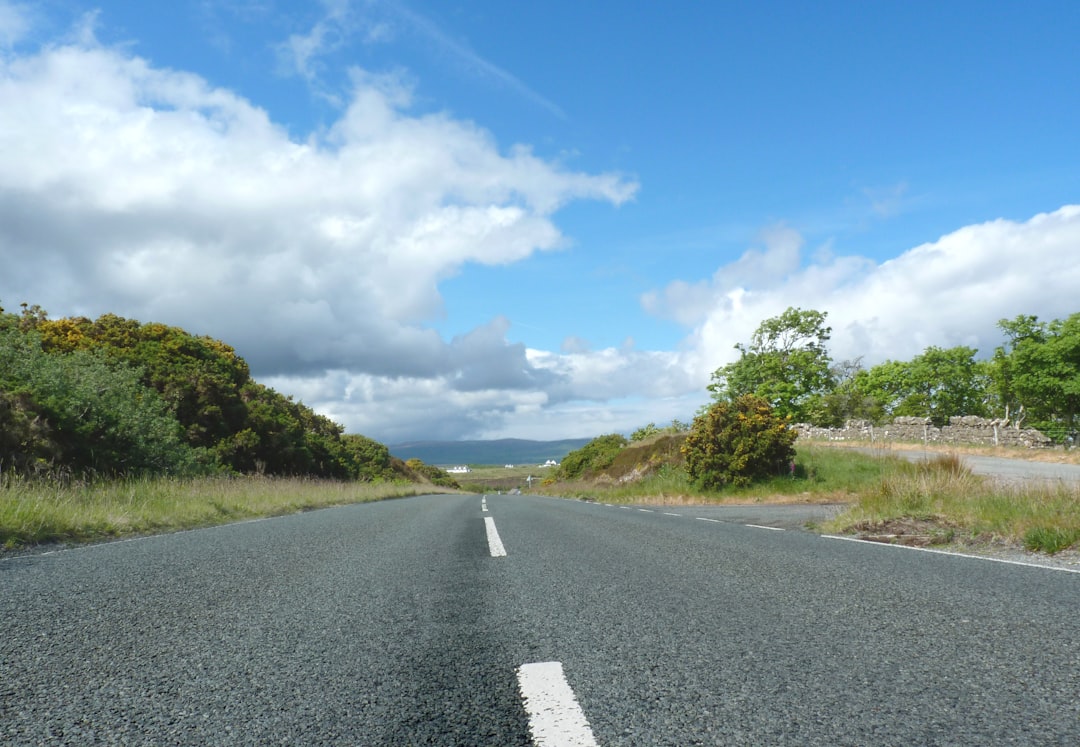
This is perhaps the most reassuring dream imagery. You find yourself on a road that is well-maintained, perfectly straight, and stretches out clearly before you, with no obstacles in sight. The sky might be clear, the sun shining, and you feel a sense of ease and confidence as you travel. Psychologically, this dream signifies that you are currently on the right track in your waking life. Your goals are clear, your path is well-defined, and you feel a strong sense of purpose and control. There are no major inner conflicts or external hindrances impeding your progress. This could relate to your career, a significant personal project, or a relationship that feels harmonious and aligned with your deepest desires. Spiritually, it suggests that your soul is in alignment with its purpose, and you are moving forward with grace and divine support. You are in a state of flow, and your actions are leading you toward your desired destination with minimal friction.
2. A Winding, Crooked, or Confusing Road (Neutral Context)
In this scenario, the road you’re on is not straightforward. It twists and turns unexpectedly, perhaps with limited visibility around the bends. You might feel a sense of mild uncertainty or curiosity, but not necessarily outright fear. This dream often reflects a period in your life where things are not entirely clear, but you are navigating them with a degree of acceptance. You may be facing decisions with multiple options, or your path forward might not be as linear as you’d hoped. Psychologically, it suggests that you are processing complexities and uncertainties in your waking life. You are adaptable and resourceful, willing to explore different avenues even if the final destination isn’t immediately apparent. Spiritually, this can represent a phase of exploration and learning. The winding path encourages you to be present in the moment, to trust your intuition, and to find wisdom in the journey itself rather than solely focusing on the endpoint. It’s a call to embrace the process of discovery.
3. A Broken, Damaged, or Unpaved Road (Fearful Context)
This dream is characterized by a road that is in disrepair. It might be full of potholes, cracked pavement, or even be a rough, unpaved track that is difficult to navigate. You might feel frustrated, anxious, or even a sense of being stuck. Psychologically, this dream points to significant obstacles, setbacks, or challenges you are currently facing in your waking life. You might feel that your progress is being hindered, that your efforts are not yielding the desired results, or that your foundational plans are unstable. This could manifest as career difficulties, relationship breakdowns, or a general feeling of being overwhelmed by circumstances. Spiritually, this dream can be a warning. It might indicate that you have strayed from your true path, or that your current direction is not aligned with your soul’s highest good. It urges you to re-evaluate your choices and seek support to repair what is broken.
4. Getting Lost on a Road (Fearful Context)
You are on a road, but you have no idea where you are going. You might be driving, walking, or even just standing at a crossroads, utterly disoriented. Panic or a deep sense of unease can pervade this dream. This dream directly reflects feelings of confusion, lack of direction, or a fear of losing control in your waking life. You might be questioning your life choices, feeling overwhelmed by your responsibilities, or uncertain about your future. Psychologically, this signifies a disconnect between your conscious desires and your current actions, or a lack of clarity about your ultimate goals. Spiritually, being lost can indicate that you have lost touch with your inner compass or your spiritual purpose. It’s a powerful call to pause, to seek inner guidance, and to re-establish a connection with your intuition and your true north.
5. A Crossroads or Fork in the Road (Neutral to Fearful Context)
You arrive at a point where the road splits into two or more directions. You must make a choice about which path to take. The emotional tone can vary from a sense of opportunity and anticipation to one of anxiety and indecision. This dream vividly symbolizes a significant decision point in your life. You are faced with choices that will have a considerable impact on your future. Psychologically, it highlights your current need to make a choice between different paths, opportunities, or beliefs. The dream encourages you to carefully consider each option, weighing its potential consequences. Spiritually, a crossroads can represent a moment of destiny, where your choices will shape your karmic path. It’s an invitation to consult your inner wisdom and to trust that the path you choose will offer the lessons you need to learn.
6. Driving a Car on a Road (Neutral to Pleasant Context)
You are in control of a vehicle, navigating a road. The feeling can be one of empowered progress or a more mundane commute. This dream generally signifies your active participation and control over your life’s journey. The car represents your physical body and your ability to move through life’s experiences. Driving on a clear road indicates that you feel competent and in charge of your direction. If the driving is smooth, it suggests you are effectively managing your responsibilities and moving towards your goals. If you are struggling to drive or the car is malfunctioning, it points to underlying issues with your ability to control or direct your life. Psychologically, it’s about agency and self-direction. Spiritually, it can represent your conscious engagement with your life’s purpose and your ability to steer your spiritual evolution.
Spiritual & Numerological Meaning
The road, as a symbol of journey, resonates deeply with spiritual concepts of destiny, karma, and the soul’s evolution. In many spiritual traditions, life is viewed as a pilgrimage, a path to be walked with awareness and intention. The road in your dream can be seen as a manifestation of this spiritual path. Numerologically, the concept of a road can be linked to the number 3, representing movement, creativity, and the synthesis of two opposing forces (like the start and end of a journey). It also connects to the number 1, signifying new beginnings and individual journeys. The number 8 might be relevant if the road symbolizes a cyclical journey or the unfolding of destiny. The number of lanes on a road can also hold significance: a single lane might represent a solitary, focused path, while a multi-lane highway could symbolize a more complex, interconnected journey with various options and influences.
From a Tarot perspective, the Chariot (VII) card strongly embodies the symbolism of a road and its journey. It represents willpower, control, and overcoming obstacles to achieve victory. The journey of the Chariot driver mirrors the dreamer’s ability to navigate their life path with determination. The Wheel of Fortune (X) also relates, signifying the cyclical nature of life, with its inherent ups and downs, much like traveling on a road that can have smooth stretches and rough patches. The Hermit (IX) might appear if the road is solitary, representing introspection and the inner journey of seeking wisdom.
Chakra connections can also be drawn. The Muladhara (Root Chakra) governs our sense of grounding and our connection to the physical world and our immediate environment, which is the stage upon which our road journey unfolds. The Svadhisthana (Sacral Chakra), related to creativity, movement, and desire, influences the nature of our journey and what we are moving towards. The Anahata (Heart Chakra) can be engaged if the road represents a journey of love or connection, while the Vishuddha (Throat Chakra) might be activated if the journey involves communication and expressing our truth along the way.
Biblically, roads are often places of significant events. The road to Emmaus, where Jesus revealed himself to his disciples, is a powerful symbol of spiritual revelation occurring during a journey. The exodus of the Israelites through the desert can be seen as a monumental road journey, fraught with challenges but leading to a promised land. Mythologically, heroes often embark on epic journeys along roads, facing trials and transformations. The road is thus a profound spiritual metaphor for our earthly existence and our progression towards higher consciousness or divine union.
Psychological Interpretation
From a Freudian perspective, the road in a dream can represent the ego’s conscious journey and its attempts to navigate the external world. The direction and condition of the road can symbolize the ego’s perceived success or failure in achieving its desires. The unconscious desires might be revealed by what lies off the road, in the unexplored territories beyond the conscious path. A desire for freedom, for breaking societal norms, or for pursuing forbidden impulses could be represented by venturing into the wilderness adjacent to the road. If the road is blocked or dangerous, it could symbolize the ego’s fear of confronting repressed desires or traumatic memories.
Carl Jung’s archetypal lens offers a richer interpretation. The road is a powerful archetype of the Great Journey or the Quest. It symbolizes the process of individuation – the journey of becoming a whole and integrated self. The road represents the conscious path of life, while the landscape surrounding it can represent the unconscious. A well-maintained road might indicate a harmonious integration of the conscious and unconscious, while a chaotic or dangerous road could suggest the dreamer is struggling with their shadow self – the repressed aspects of their personality. The anima (in men) or animus (in women) might appear as fellow travelers or figures encountered on the road, representing the integration of the contra-sexual aspect of the psyche. A crossroads can symbolize the critical junctures in individuation where a choice must be made to move towards greater wholeness or to remain in a state of stagnation.
Modern dream science often views road dreams as reflections of our current life trajectory and decision-making processes. Neuroscientific research suggests that dreams help us consolidate memories, process emotions, and simulate potential future scenarios. Dreaming of a road can therefore be the brain’s way of rehearsing responses to anticipated challenges or opportunities. If you are facing a major life decision, your brain might construct dream scenarios involving roads to help you explore the potential outcomes of each choice. The emotional valence of the dream – whether it feels pleasant or fearful – is a strong indicator of your underlying emotional state regarding your current path. A positive emotional tone suggests optimism and confidence, while fear indicates anxiety and uncertainty about your direction.
Cultural Variations
The interpretation of roads in dreams is remarkably consistent across many cultures, largely due to their universal function as pathways for travel and commerce. However, nuances exist.
In Native American cultures, roads are often seen as spiritual pathways, connecting the physical world with the spirit world. Dreams of roads can be interpreted as messages from ancestors or spirits, guiding the dreamer on their life path. The direction and nature of the road are crucial; a clear, open road might signify a blessed path, while a blocked or tangled one could indicate spiritual disharmony or a need for cleansing rituals.
In Eastern philosophies, particularly Hinduism and Buddhism, the concept of karma and reincarnation imbues the road with profound meaning. The road in a dream can represent the current life’s karmic path, and its condition might reflect past actions and their present consequences. A difficult road suggests a challenging karmic lesson, while a smooth one might indicate a period of grace. The journey itself is paramount, emphasizing the process of spiritual growth and detachment from material desires.
In Western folklore and mythology, roads are often sites of supernatural encounters. Crossroads, in particular, are historically associated with mystical beings, pacts, and significant choices. Dreams of crossroads can tap into this ancient symbolism, suggesting a powerful moment of decision with potentially supernatural or fated implications. The act of traveling alone on a road might evoke themes of the hero’s journey, where isolation is necessary for self-discovery and the overcoming of formidable challenges.
Across African cultures, roads are vital arteries for community and trade. Dreams involving roads can therefore reflect concerns about social connections, the flow of resources, or the broader community’s well-being. A well-traveled road might symbolize prosperity and connection, while a deserted road could signify isolation or a breakdown in community ties.
Despite these variations, the core symbolism of the road as a representation of life’s journey, choices, and destiny remains a potent and universally understood theme in dream interpretation.
What To Do After This Dream
Dreams of roads are a direct invitation from your subconscious to examine your life’s direction. Here’s how to harness their wisdom:
Journaling Prompts:
- Describe the road in detail: What color was it? Was it paved, dirt, gravel? How wide was it? Were there any markings?
- Your role on the road: Were you walking, driving, cycling, or observing? Who else was there? Were you alone?
- Your emotional state: How did you feel on the road? Relieved, anxious, excited, scared, bored, determined?
- The destination (or lack thereof): Did you know where you were going? Did you have a destination in mind? If so, what was it? If not, how did that feel?
- The surrounding landscape: What was on either side of the road? Was it familiar, strange, beautiful, dangerous?
- Current life parallels: What major decisions, challenges, or transitions are you currently experiencing in your waking life? Which of these does the dream road most closely resemble?
Action Steps:
- Assess your current direction: If the road was clear and pleasant, acknowledge and celebrate your progress. If it was difficult, ask yourself what specific obstacles you need to address.
- Make conscious choices: If you dreamt of a crossroads, take the time to thoughtfully consider your options. Seek advice if needed, but ultimately trust your intuition.
- Seek clarity if lost: If you felt lost, it’s time to reconnect with your inner compass. Meditate, spend time in nature, or talk to a trusted friend or mentor to regain a sense of direction.
- Address blockages: If the road was broken or blocked, identify the specific issues that are hindering your progress. Break down the problem into smaller, manageable steps.
- Embrace the journey: Regardless of the road’s condition, remember that life is a journey. Focus on the present moment and find meaning and lessons in every step.
- Consult a professional: If recurring or particularly disturbing road dreams are causing distress, consider consulting a dream analyst or therapist for deeper insights.