The Whispering Depths: Unraveling the Mystical Meanings of Ocean Dreams
Ah, the ocean! That vast, unfathomable expanse that mirrors the deepest parts of ourselves. When the ocean surges into your dreams, it’s no mere random flicker of the subconscious; it’s a profound call from the depths, an invitation to explore the hidden currents of your inner world. Like the tides that ebb and flow, your dreams speak of powerful emotional forces, vast potentials, and sometimes, the overwhelming nature of life’s challenges. Understanding the language of the ocean in your dreams can unlock a treasure trove of self-knowledge, offering guidance on your spiritual journey, insights into your psychological landscape, and practical wisdom for navigating your waking life. Let us embark on this journey together, to chart the course of your oceanic dreams and discover the profound messages they hold.
What Does the Ocean Mean in a Dream?
The ocean, in its immense scale and ever-changing nature, is one of the most potent and multifaceted symbols to appear in our dreams. Etymologically, the word “ocean” derives from the Greek word “Okeanos,” a primordial sea-god who represented the great river encircling the entire world. This origin speaks volumes about its symbolic power: the ocean is the primordial source, the great mother, the ultimate container of all life and all potential. In dreams, it most commonly symbolizes the unconscious mind itself – that vast, uncharted territory within us where our deepest desires, forgotten memories, primal instincts, and unexpressed emotions reside. It is the collective unconscious, as described by Carl Jung, a reservoir of universal archetypes and experiences shared by all humanity.
Think of the ocean’s characteristics: its depth, its immensity, its power, its mystery, its life-giving properties, and its capacity for destruction. These qualities are directly mirrored in our inner lives. A calm, serene ocean might represent peace, tranquility, and a harmonious connection with your inner self, suggesting a period of emotional stability and clarity. Conversely, a turbulent, stormy ocean can signify inner turmoil, overwhelming emotions, anxiety, or a feeling of being out of control. The sheer vastness of the ocean often relates to feelings of being overwhelmed by life’s responsibilities, the immensity of a problem, or the boundless possibilities of the future. It can also represent the spiritual realm, the divine, or the infinite. The ebb and flow of the tides can represent cycles of emotional release and replenishment, or the natural rhythm of life and death, creation and destruction. The ocean is also the birthplace of life, and as such, can symbolize new beginnings, fertility, and the potential for growth and transformation.
Common Dream Scenarios
1. Peaceful, Calm Ocean
Imagine waking up with a feeling of profound serenity after dreaming of a vast, placid ocean stretching to the horizon, its surface like glass under a gentle sun. This is a deeply positive omen. Psychologically, it suggests a state of inner peace and emotional equilibrium. Your unconscious is communicating a sense of calm and control, indicating that you are feeling grounded, emotionally stable, and in tune with yourself. It can signify a period of creative flow and intuitive clarity, where ideas and solutions come to you effortlessly. Spiritually, a calm ocean represents a connection to the divine, a sense of oneness with the universe, and a feeling of being divinely guided. It might also point to a period of spiritual growth and enlightenment, where you feel at peace with your path and purpose. Practically, this dream encourages you to embrace this period of harmony. Continue to nurture your inner peace, engage in activities that bring you joy and contentment, and trust your intuition. This is a time to savor and build upon your inner stillness.
2. Stormy, Turbulent Ocean
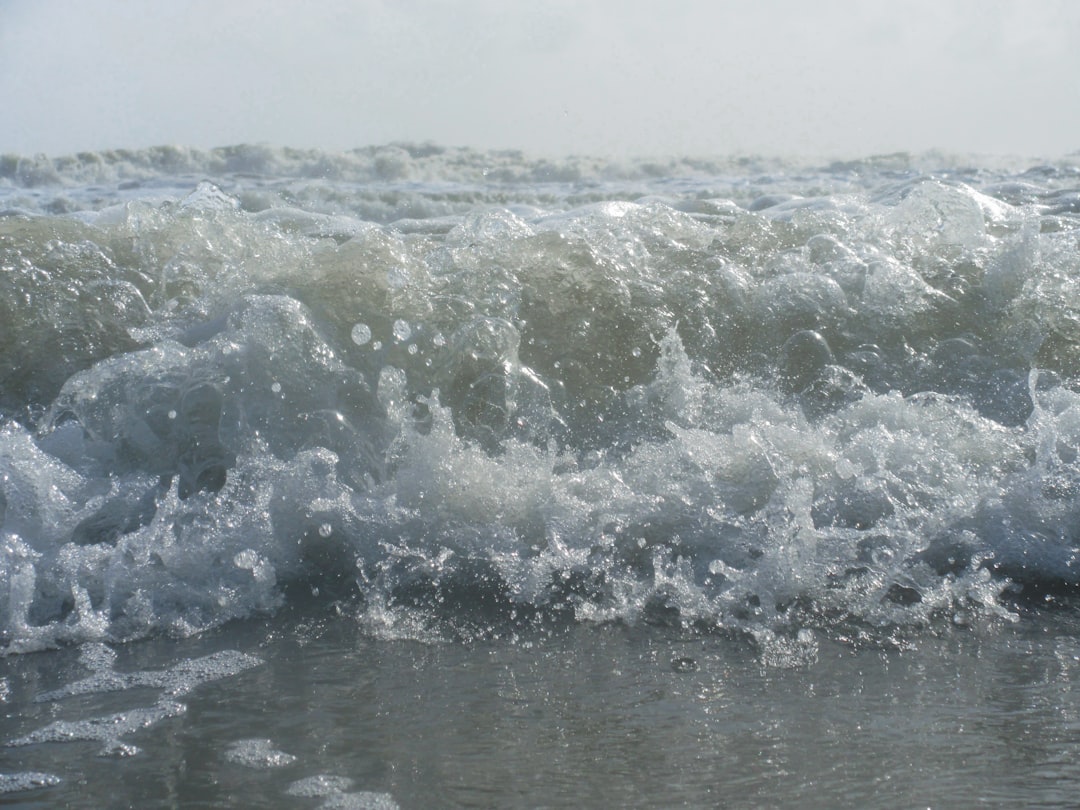
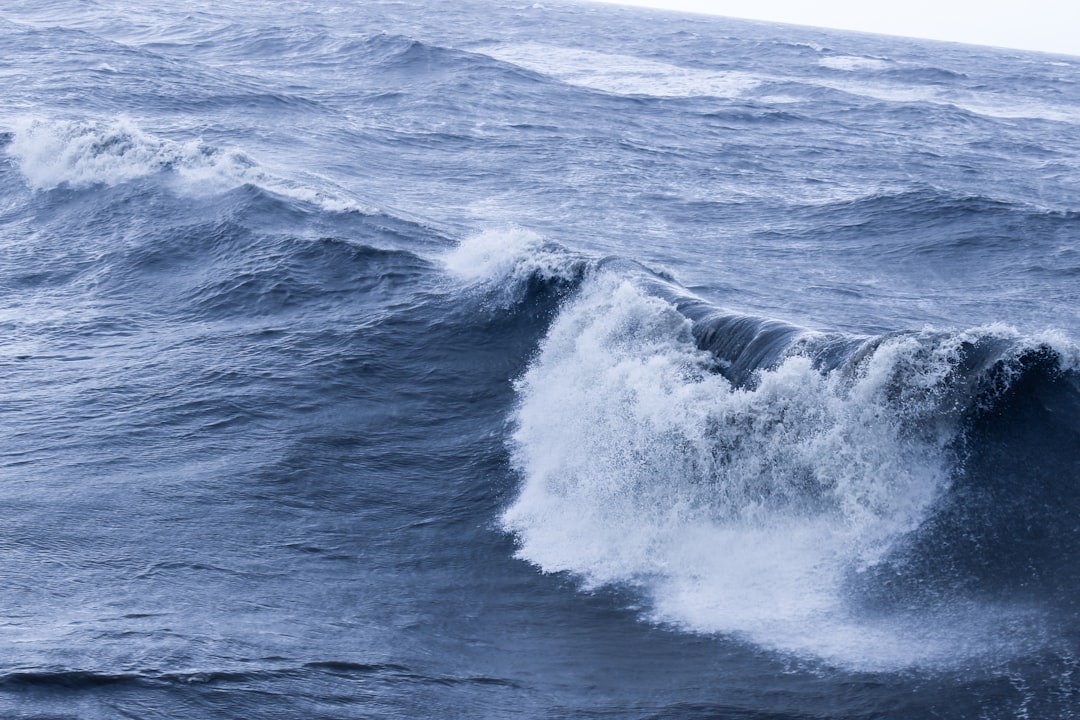
Conversely, picture a dream filled with the roar of crashing waves, dark, menacing clouds, and a churning, chaotic ocean. This scenario often evokes fear and anxiety upon waking. Psychologically, a stormy ocean is a powerful representation of inner conflict, emotional distress, or overwhelming stress. It suggests that you are grappling with intense emotions like anger, fear, or sadness, and that these feelings are threatening to engulf you. You might feel out of control in your waking life, or that external circumstances are creating immense pressure. Carl Jung would interpret this as the eruption of your shadow self, the repressed or unacknowledged aspects of your personality that are demanding attention. Spiritually, it could indicate a spiritual crisis, a period of doubt, or a challenging karmic lesson you are currently facing. You might feel disconnected from your spiritual center. Practically, this dream is a wake-up call. Acknowledge the storm within. Identify the sources of your stress and emotional turmoil. Seek healthy outlets for your feelings, whether through therapy, creative expression, or open communication with trusted friends. This is a time to face your inner tempest, not by fighting it, but by understanding its origins and learning to navigate its intensity.
3. Drowning in the Ocean
The visceral terror of struggling for breath, the crushing weight of the water, the feeling of being pulled under – dreaming of drowning in the ocean is a deeply frightening experience. This dream typically signifies feeling overwhelmed and losing control in your waking life. Psychologically, it can represent an inability to cope with current emotional pressures, responsibilities, or a significant life event. You may feel as though your emotions are drowning you, or that you are being submerged by external circumstances. Freud might interpret this as a manifestation of repressed desires or anxieties that are threatening to surface and overwhelm your conscious mind. Spiritually, drowning can symbolize a loss of spiritual direction, a feeling of being lost in the vastness of existence, or an encounter with the darker aspects of the collective unconscious. It may also indicate a desire to let go of old patterns or a past self to be reborn. Practically, this dream is a stark warning to seek help or change your approach. Identify what or who is making you feel like you are drowning. Reach out to your support system, delegate tasks, or take a step back to reassess your situation. This is a critical moment to find your footing and fight for your survival, metaphorically speaking.
4. Swimming in the Ocean
If your dream involves swimming with ease and grace in the ocean, it’s a sign of comfort and mastery over your emotional and subconscious realms. Psychologically, this indicates that you are navigating your emotions with skill and confidence. You are in touch with your inner world and can move through challenges with a sense of control and adaptability. This dream suggests you are embracing your potential and are comfortable with the ebb and flow of your inner life. Jung might see this as a successful integration of your anima or animus, the inner feminine or masculine qualities, allowing for greater balance and self-understanding. Spiritually, swimming in the ocean can represent a harmonious journey through the spiritual realms, a deep connection to your intuition, and a sense of flow in your spiritual practice. You are moving in sync with the cosmic currents. Practically, this dream encourages you to continue on your current path. Trust your abilities, embrace new opportunities that align with your inner compass, and continue to cultivate your emotional intelligence. You are well-equipped to handle what comes your way.
5. Ocean Creatures (Whales, Sharks, Dolphins)
The appearance of specific ocean creatures adds another layer of meaning to your dreams. A gentle giant like a whale can symbolize immense wisdom, ancient knowledge, and the vastness of the subconscious. It might represent a profound spiritual awakening or a connection to a deeper truth. Dolphins, often seen as guides, symbolize joy, playfulness, communication, and harmony. They can indicate a need for more connection and lightheartedness in your life, or that you are being guided by benevolent forces. Sharks, on the other hand, can evoke fear and are often associated with primal instincts, aggression, or hidden dangers. They might represent repressed anger, predatory tendencies (either your own or someone else’s), or a threat lurking beneath the surface. Psychologically, encountering these creatures can reflect your engagement with archetypal forces within the unconscious. Spiritually, they might represent different levels of consciousness or spiritual beings. Practically, consider the interaction: if you swam with dolphins, it’s positive; if you were attacked by a shark, it’s a warning. Reflect on the emotions these creatures evoked and what they might represent in your current life circumstances.
6. Being on the Shore, Looking at the Ocean
If you dream of standing on the shore, gazing out at the vast ocean, it signifies a liminal state – a point of transition or contemplation. Psychologically, you might be on the cusp of a significant decision or change, observing the possibilities and potential challenges without fully immersing yourself yet. It suggests you are aware of the immensity of your unconscious or of life’s possibilities but are currently maintaining a safe distance. This can also represent a desire for exploration but a hesitation to dive in fully due to fear or uncertainty. Spiritually, it can indicate a period of reflection, where you are contemplating your spiritual path and its vastness. You are observing the divine from a place of safety. Practically, this dream encourages you to consider what is holding you back from fully engaging with your desires or the opportunities before you. It’s a time for introspection and preparation before taking the plunge.
Spiritual & Numerological Meaning
From a spiritual perspective, the ocean is often seen as the primordial soup of creation, the source from which all life emerges and to which it eventually returns. It is the Great Mother, the womb of the universe, representing the boundless, unconditional love and nurturing aspect of the divine. In many creation myths, the world is born from the ocean. This connects to the concept of the Root Chakra (Muladhara), which anchors us to the earth and our physical existence, but also to the primal energies of creation. The ocean’s vastness and depth can also be linked to the Third Eye Chakra (Ajna), representing intuition, psychic abilities, and spiritual insight. Dreams of the ocean can signify a stirring within these energy centers, urging you to connect with your deeper spiritual knowing.
Numerologically, the number associated with water and the ocean is often 2, representing duality, intuition, emotions, and the subconscious. It also signifies connection and relationships, as the ocean connects continents. The number 3 can also be relevant, representing creativity, expansion, and the divine feminine, echoing the ocean’s generative power. If the ocean appears with a specific number of waves or a certain depth is emphasized, those numbers can offer further clues. For instance, a dream with seven distinct waves might draw on the spiritual significance of the number seven (completion, spirituality), while a dream of a vast, seemingly bottomless ocean might relate to infinity or the unknown. Biblical references abound, from the parting of the Red Sea, symbolizing divine intervention and liberation, to the Flood, representing a cleansing and rebirth of humanity. Mythologically, deities like Poseidon (Greek) or Neptune (Roman) rule the seas, embodying their power, mystery, and sometimes destructive force, reflecting the raw, untamed aspects of nature and the unconscious. The ocean can also be seen as a gateway to the underworld or the spirit world, a passage that must be navigated with respect and courage.
Psychological Interpretation
From a Freudian perspective, the ocean is a potent symbol of the unconscious mind, a vast repository of repressed desires, primal instincts, and unresolved conflicts. Its depth and inscrutability mirror the hidden aspects of the psyche that are largely inaccessible to conscious awareness. Dreaming of the ocean, especially turbulent waters or drowning, can signify the eruption of these repressed elements into consciousness, threatening to overwhelm the ego. The ocean’s fluidity and shapelessness can also represent primal sexuality and the id’s raw urges. Freud might interpret the ocean as a metaphor for the primal urge for reunification with the mother, a return to the pre-birth state of oceanic oneness. The vastness can also represent the fear of being consumed by these powerful, instinctual forces.
Carl Jung, expanding on Freud, viewed the ocean as a symbol of the collective unconscious, the inherited reservoir of human experience and archetypes. It is the primordial realm from which all consciousness emerges. The ocean’s currents and tides represent the ebb and flow of psychic energy and the archetypal patterns that influence our lives. For Jung, a calm ocean might indicate a harmonious integration of the psyche, while a stormy ocean could signify the emergence of powerful, unintegrated archetypes or the shadow. The anima (feminine aspect in men) and animus (masculine aspect in women) can also be represented by the ocean’s depths and its ever-changing nature, reflecting the dynamic interplay of these inner forces. Modern dream science often views ocean dreams as indicators of emotional processing. The brain, particularly the amygdala (involved in processing emotions), may be working through unresolved feelings, anxieties, or even profound joy. The visual and sensory input of the ocean in a dream can be a way for the brain to simulate and process these emotional states in a safe, albeit sometimes frightening, environment. The degree of clarity or chaos in the dream reflects the dreamer’s current emotional landscape and their capacity to manage it.
Cultural Variations
Across the globe, the ocean holds diverse and often profound meanings. In many Indigenous cultures, particularly those in coastal regions, the ocean is revered as a sacred entity, the source of life and sustenance, and the home of ancestral spirits. Dreams of the ocean are often seen as direct communication from these spirits or as omens related to fishing, weather, and community well-being. The Polynesian cultures, for instance, have a deep spiritual connection to the ocean, viewing it not as a barrier but as a pathway for exploration and connection. Dreams of the sea are integral to their navigational knowledge and spiritual beliefs.
In Eastern philosophies, the ocean is often associated with the concept of the Tao or the ultimate reality – formless, boundless, and eternal. The fluid nature of water is seen as a metaphor for adaptability and the flow of life. In Hinduism, the ocean is sometimes depicted as the abode of Vishnu, representing the cosmic ocean of consciousness. In Buddhism, the vastness of the ocean can symbolize the immense suffering of samsara, but also the potential for enlightenment, which is as boundless as the ocean itself. In Western cultures, while the ocean is often a symbol of adventure and the unknown, it can also evoke a sense of isolation, danger, and the sublime – the awe-inspiring and terrifying power of nature. The romantic movement, for example, often depicted the ocean as a force of untamed beauty and emotional intensity.
What To Do After This Dream
Waking from an ocean dream, regardless of its emotional tenor, is an opportunity for deep introspection and practical application. Your subconscious has sent you a message of immense significance, and how you respond can shape your journey forward.
Journaling Prompts:
- Describe the ocean in your dream in as much detail as possible: its color, its movement, its temperature, its sound. What emotions did these details evoke?
- What were you doing in relation to the ocean? Were you swimming, observing, drowning, or something else? How did these actions make you feel?
- Were there any other elements present – creatures, boats, landforms, people? What role did they play?
- What are the dominant emotions you felt upon waking from this dream? Fear, peace, awe, anxiety, excitement?
- Consider your current life situation. Are there any areas where you feel overwhelmed, at peace, in control, or out of control?
- If you felt fear or anxiety, what specific situations or feelings in your waking life might this ocean represent?
- If you felt peace or joy, what aspects of your life are currently contributing to this sense of harmony?
- What is one small step you can take today to better understand or navigate the emotional currents in your life?
Action Steps:
- Embrace the Flow: If your dream was peaceful, consciously cultivate that sense of calm. Engage in mindfulness, meditation, or activities that bring you joy and a sense of inner peace.
- Address the Storm: If your dream was turbulent, acknowledge the inner turmoil. Identify the sources of your stress or emotional distress and develop a plan to address them. This might involve seeking professional help, having difficult conversations, or making significant life changes.
- Find Your Anchor: If you dreamed of drowning, it’s a sign to seek support. Reach out to friends, family, or a therapist. Don’t try to navigate overwhelming feelings alone.
- Explore Your Depths: Whether the ocean was calm or stormy, it represents your inner world. Consider exploring your unconscious through creative arts, journaling, or even dream analysis groups.
- Honor Cycles: The ocean’s tides represent natural cycles. Reflect on the cycles in your own life – periods of growth, rest, release, and renewal. Learn to work with them rather than against them.
- Seek Guidance: If specific ocean creatures appeared, research their symbolism in different cultures and spiritual traditions. They may be offering specific guidance or highlighting aspects of your personality or situation.
The ocean in your dreams is a profound invitation to explore the vast, powerful, and often mysterious landscape of your own psyche. By understanding its multifaceted symbolism, you can gain invaluable insights into your emotional state, spiritual journey, and the path forward.